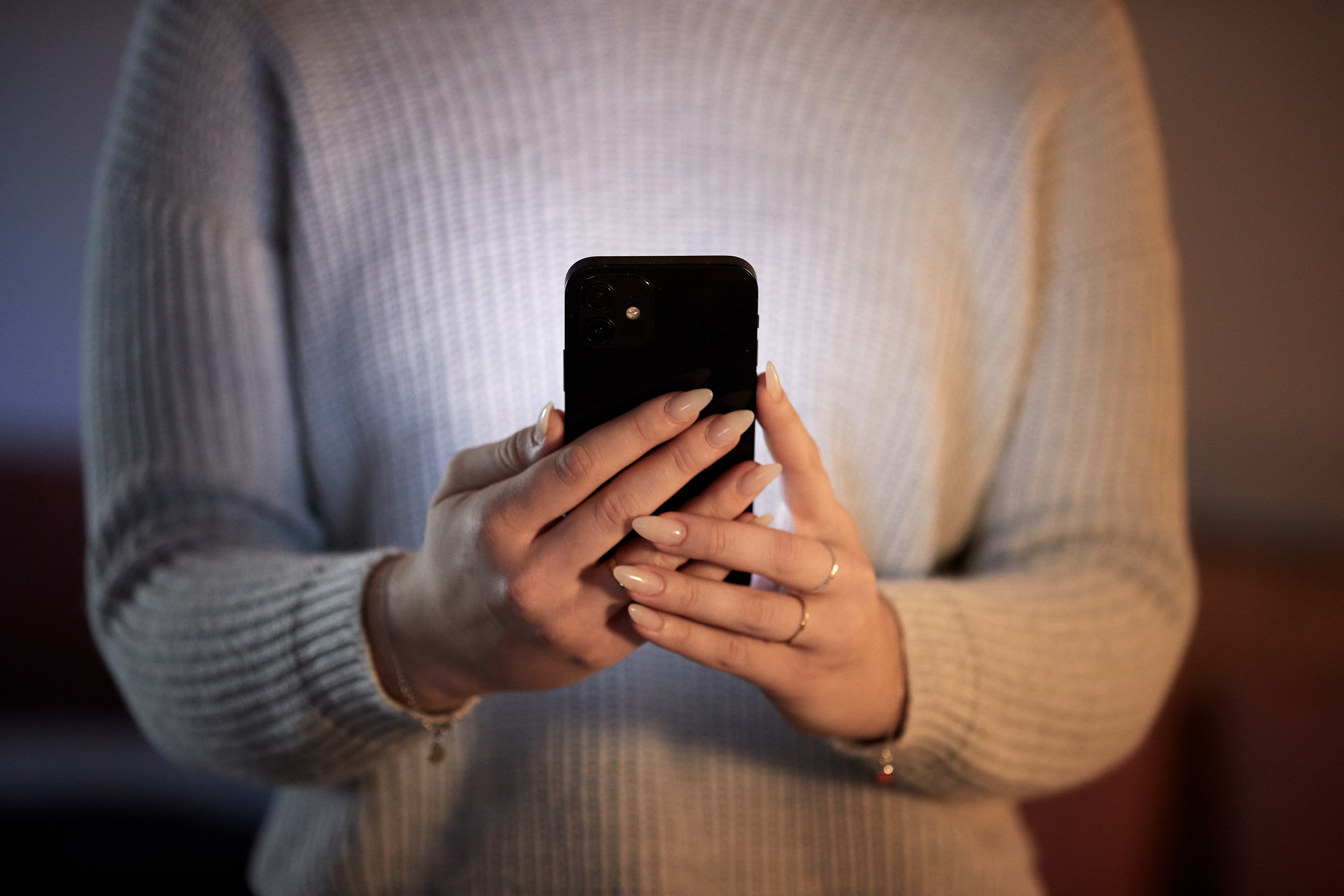
Social Media causes unnecessary consumption among youth
Many people aged 18-30 buy sustainably to showcase it on social media. At the same time, many in the same age group report that influencers on various platforms cause them to consume unnecessarily. For the younger generation, one of the most important drivers for more sustainable consumption is to strengthen their self-image. This is shown in Stena Recycling’s new report, Circular Voice.
There is no doubt that consumers consider themselves environmentally conscious. Only ten percent of respondents say they do not care about making sustainable and environmentally friendly choices. In the youngest age group, between 18 and 30 years, the figure is even lower. In Sweden and Finland, it is as low as five percent.

To motivate the younger target group to make these sustainable and environmentally friendly choices in store shelves or online, there are several factors for both companies and organizations to consider:
- 48 percent of Finns say that a strengthened self-image is an important driver for sustainable consumption
- 29 percent in Poland get information and inspiration about sustainable and environmentally friendly alternatives through social media
- One in four in Poland states that it is important that their choices make other people’s perception of them more positive.
- 23 percent of Danes consume more sustainably to be able to show it on social media
- 23 percent of Swedes say that influencers drive them to more unnecessary spontaneous purchases
For most respondents in the survey, price and lack of belief in how sustainable the product really is are the highest barriers to choosing a more environmentally friendly and sustainable alternative. 52 percent say it is too expensive. 33 percent do not trust that the product or service is really more sustainable.
“That social media is important for the younger target group is perhaps not so surprising, but that so many of those between 18 and 30 years choose green alternatives to be able to showcase it on social platforms stands out. The price tag is of course important for almost all consumers. Here it is important to find ways to convey messages that can disprove the perception that green is always more expensive. For companies, a transition to a circular economy is often both more resource- and cost-efficient,”
says Gisela Lindstrand, Head of Sustainability, Brand & Communications at Stena Metall.
About Stena Recycling
Stena Recycling is a leading recycling company and a full-service partner for developing sustainable circular solutions for all types of businesses. With dedicated employees and extensive facilities across seven countries, we create long-term solutions every day for both our customers and society as a whole. By keeping resources in circulation, Stena Recycling plays an important and central role in the transition to a circular economy.
About the Survey
5,000 consumers aged 18-65 in Sweden, Norway, Denmark, Finland, and Poland participated in the survey conducted by Ipsos in May 2024.
What is important to you when choosing products and services presented as more sustainable and environmentally friendly?
| Total | DK | NO | PL | SE | FI | |
| That what I buy maintains the same quality as other alternatives | 36% | 36% | 46% | 33% | 40% | 24% |
| That others’ perception of me becomes more positive | 9% | 8% | 5% | 21% | 8% | 6% |
| That my self-image is strengthened by doing something good for the environment | 27% | 15% | 10% | 46% | 19% | 45% |
| That the choice I make contributes to a healthier planet | 51% | 50% | 50% | 53% | 55% | 45% |
| That the choice I make positively impacts social sustainability in the manufacturing process | 35% | 33% | 34% | 41% | 39% | 27% |
| Other reason | 2% | 3% | 3% | 1% | 1% | 2% |
| I don’t care about making sustainable or environmentally friendly choices | 10% | 10% | 12% | 7% | 9% | 11% |
| Unsure/don’t know | 8% | 9% | 8% | 8% | 6% | 8% |
What is important to you when choosing products and services presented as more sustainable and environmentally friendly?
| 18–30 years DK | 18–30 years NO | 18–30 years PL | 18–30 years SE | 18–30 years FI | |
| That what I buy maintains the same quality as other alternatives | 37% | 49% | 35% | 38% | 27% |
| That others’ perception of me becomes more positive | 15% | 7% | 25% | 12% | 12% |
| That my self-image is strengthened by doing something good for the environment | 22% | 16% | 38% | 22% | 48% |
| That the choice I make contributes to a healthier planet | 46% | 52% | 47% | 52% | 44% |
| That the choice I make positively impacts social sustainability in the manufacturing process | 38% | 38% | 38% | 42% | 25% |
| Other reason | 4% | 2% | 1% | 3% | 2% |
| I don’t care about making sustainable or environmentally friendly choices | 8% | 6% | 9% | 5% | 5% |
| Unsure/don’t know | 8% | 8% | 8% | 5% | 8% |
Do social media and influencers affect your consumption habits in any way?
| Total | DK | NO | PL | SE | FI | |
| I get information and inspiration on social media about sustainable/environmentally friendly alternatives to products and services I already use | 16% | 13% | 13% | 20% | 17% | 19% |
| I consume more sustainably (e.g., through second-hand or sustainable/environmentally friendly alternatives) to showcase it on social media | 12% | 9% | 7% | 15% | 15% | 14% |
| Influencers inspire me to shop more second-hand | 10% | 10% | 10% | 9% | 11% | 13% |
| Influencers drive me to make more unnecessary spontaneous purchases | 11% | 9% | 12% | 9% | 13% | 11% |
| Influencers inspire me to consume fewer goods and services | 8% | 7% | 6% | 8% | 7% | 11% |
| Social media is a source of information and makes me more aware of my environmental impact – but I haven’t changed anything yet | 12% | 11% | 10% | 14% | 12% | 14% |
| I am not influenced by social media | 48% | 53% | 52% | 44% | 47% | 42% |
| Other reason | 2% | 2% | 2% | 1% | 2% | 2% |
| Unsure/don’t know | 9% | 8% | 10% | 11% | 7% | 7% |
Do social media and influencers affect your consumption habits in any way?
| 18–30 years DK | 18–30 years NO | 18–30 years PL | 18–30 years SE | 18–30 years FI | |
| I get information and inspiration on social media about sustainable/environmentally friendly alternatives to products and services I already use | 23% | 19% | 29% | 27% | 25% |
| I consume more sustainably (e.g., through second-hand or sustainable/environmentally friendly alternatives) to showcase it on social media | 23% | 11% | 16% | 19% | 19% |
| Influencers inspire me to shop more second-hand | 18% | 23% | 12% | 19% | 19% |
| Influencers drive me to make more unnecessary spontaneous purchases | 19% | 22% | 13% | 23% | 20% |
| Influencers inspire me to consume fewer goods and services | 14% | 9% | 10% | 10% | 15% |
| Social media is a source of information and makes me more aware of my environmental impact – but I haven’t changed anything yet | 18% | 15% | 21% | 16% | 17% |
| I am not influenced by social media | 29% | 32% | 30% | 29% | 18% |
| Other reason | 2% | 2% | 1% | 2% | 2% |
| Unsure/don’t know | 8% | 8% | 9% | 6% | 7% |
What, if anything, can prevent you from choosing more sustainable and environmentally friendly alternatives?
| Total | DK | NO | PL | SE | FI | |
| It is too expensive | 52% | 53% | 58% | 47% | 56% | 47% |
| It is too difficult to find out which products and services are sustainable | 33% | 34% | 30% | 41% | 24% | 37% |
| I do not trust that the product or service is sustainable/environmentally friendly | 33% | 30% | 36% | 38% | 31% | 28% |
| I do not believe I can make a difference anyway | 17% | 13% | 16% | 25% | 14% | 16% |
| I believe I can make a difference but do not think it is my responsibility | 10% | 9% | 7% | 12% | 9% | 11% |
| If no one sees or knows, I do not care about choosing the more sustainable option | 7% | 6% | 5% | 9% | 6% | 8% |
| Other reason | 2% | 3% | 2% | 1% | 1% | 2% |
| Not applicable, I always choose the more sustainable option | 5% | 5% | 4% | 3% | 6% | 7% |
| Unsure/don’t know | 8% | 8% | 9% | 11% | 7% | 6% |
What, if anything, can prevent you from choosing more sustainable and environmentally friendly alternatives?
| 18–30 years DK | 18–30 years NO | 18–30 years PL | 18–30 years SE | 18–30 years FI | |
| It is too expensive | 60% | 59% | 53% | 52% | 42% |
| It is too difficult to find out which products and services are sustainable | 34% | 33% | 42% | 28% | 35% |
| I do not trust that the product or service is sustainable/environmentally friendly | 32% | 30% | 43% | 29% | 26% |
| I do not believe I can make a difference anyway | 14% | 15% | 29% | 14% | 19% |
| I believe I can make a difference but do not think it is my responsibility | 15% | 12% | 10% | 10% | 16% |
| If no one sees or knows, I do not care about choosing the more sustainable option | 12% | 9% | 9% | 9% | 10% |
| Other reason | 1% | 3% | 0% | 3% | 2% |
| Not applicable, I always choose the more sustainable option | 3% | 3% | 5% | 7% | 4% |
| Unsure/don’t know | 4% | 6% | 7% | 6% | 6% |


Latest news
![Stacked cars]() 2026-08-14
2026-08-14Automotive circularity becomes mandatory: What the new EU rules mean
![Major advances toward full-scale recycling of wind turbine blades - Image: Vestas]() 2026-05-12
2026-05-12Major advances toward full-scale recycling of wind turbine blades
![Vestas visiting Stena Recycling in Halmstad Sweden]() 2026-04-29
2026-04-29Stena Recycling and Vestas strengthen collaboration on blade circularity at industrial testbed
![Hand of Stena Recycling employee touching material.]() 2026-04-17
2026-04-17Stena Recycling’s Climate Impact Report for 2025 is published
![A Stena Recycling expert prepares to discharge a lithium-ion vehicle battery.]() 2026-02-04
2026-02-04Stena Recycling expands major investment in electric vehicle batteries – invests over SEK half a billion
![Close-up of gloved hands working on electric vehicle battery modules during inspection or recycling process]() 2025-12-02
2025-12-02Stena Recycling in partnership to scale a national circular battery value chain in Sweden
![Annual report 2024/2025 Stena Metall]() 2025-11-26
2025-11-26Stena Metall’s annual reports for 2024/2025 now available