

Our history
A pioneering spirit from the start
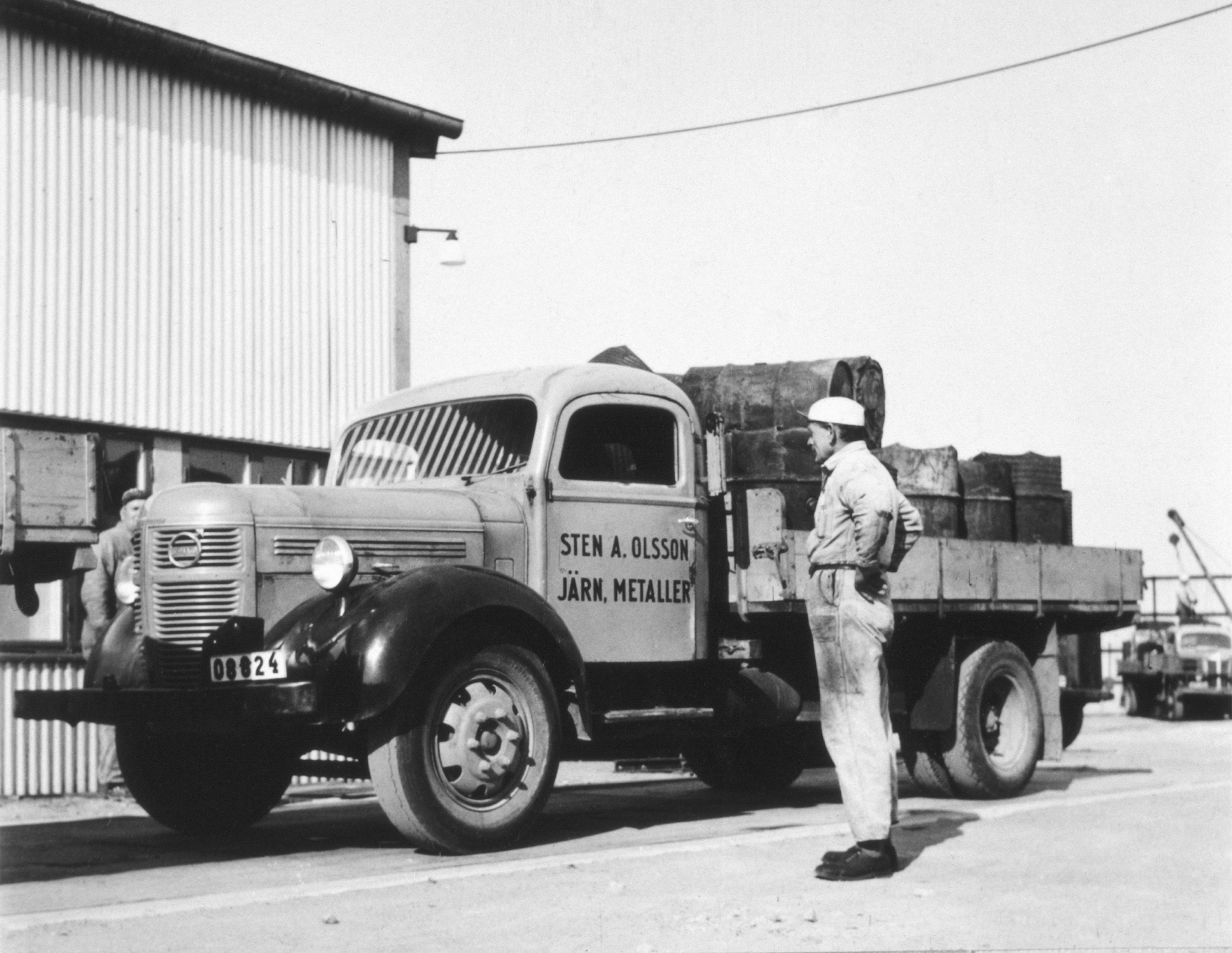
Where others see the end, we see the beginning of something new. This has been our approach to material recycling since the 1930s. And it all began with our founder, Sten Allan Olsson, when he started trading scrap metal, iron, raw rubber and rags from his small office in Gothenburg, Sweden, in 1939.
Since the very beginning, we have dedicated ourselves to utilizing and refining resources that would otherwise have been lost. Over the last 80 years, our operations have expanded and continually evolved to cover many areas including waste collection, recycling and reuse.
We have driven the development of innovative recycling solutions for metal, iron, plastic, paper, hazardous waste, lithium-ion batteries and other complex materials.
We also trade in high-quality recycled raw materials, produce aluminium alloys and can contribute to sustainable product design. And now, with Stena Circular Consulting, we have expanded our offering to support companies in their development towards sustainable and circular business models.
But while a lot of things have changed and evolved, some important things remain the same. We are still privately owned by the Olsson family, we still call Gothenburg home, and we are still guided by Sten Allan Olsson’s entrepreneurial spirit and business acumen.

“Caring for each other and the environment means working in harmony. You solve problems together, and that’s what sparks development.“
Dan Stena Olsson, CEO Stena AB and Executive Chairman, Stena Metall Group.


A history of true entrepreneurial spirit
1939 - 1983
1939 – The foundations of the Stena Metall Group, and indeed the Stena Sphere, were laid when 23-year-old Sten A. Olsson began trading metals, other scrap and raw rubber from a little office in Gothenburg.
1950s – An expansive era where the number of employees grew rapidly.
1952 – After working mostly with trading and storage, the company opened its first branch office and scrap collection and processing took off.
1952 – Land purchased in Tingstad becomes the company’s first scrap yard.
1970 – Strategic decision taken that Stena Metall is “not just a scrap wholesaler”.
1972 – Over the years, freight became increasingly important but it wasn’t until 1972 that the business was divided into Stena Metall and Stena Line.
1977 – Steel wholesaler purchased.
1980 – Stena Metall acquires PLM Återvinning – Sweden’s second largest recycling company at that time. Stena Metall’s operations more than double.
1980 – Stena Oil is founded.
1982 – Stena Metall’s environmental companies are founded.
1983 – Stena Metall is sold from Stena AB. New group The Stena Metall AB group with the same shareholders is formed.
1984 - 2000
1984 – The Group’s various businesses are incorporated.
1985 – Averhoff & Co A / S is acquired.
1989 – The fall of the Berlin Wall changes trading activities.
1989 – Stena Metall acquires Car Fragmentation.
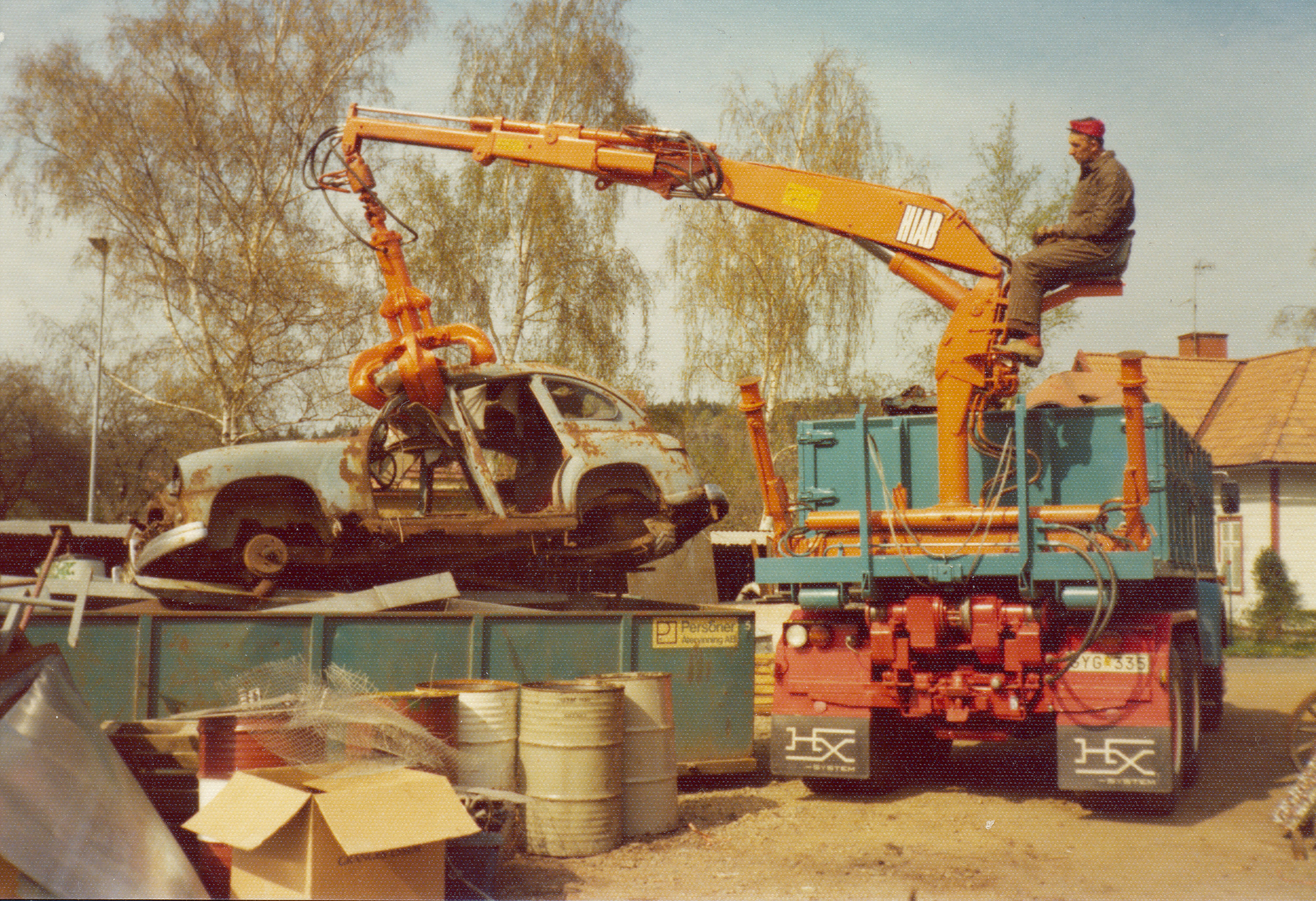
1990s – From the ‘90s onwards our recycling operations expanded more rapidly. The Group also became providers of steel, aluminium and oil. We also acquired a small company in the growing electronics recycling industry.
1992 – Stena Miljö A / S is established in Norway.
1994 – Producer liability legislation is introduced in Sweden.
1994 – The export ban on iron and scrap metal is lifted.
1994 – Stena’s recycling of waste from electrical and electronic equipment is founded in Sweden.
1996 – Stena Miljö establishes a subsidiary in Finland.
1999 – The Stena Group doubled in size through the acquisition of the Gotthard Nilsson group.
2000-2010 – International expansion in the Nordic countries, Poland, Germany, Austria, Italy, Romania, the Czech Republic and Italy. Rapid development of R&D activities, products, complete solutions and other services for various industries.
2001 - 2019
2001 – Scrap yards are established in Russia.
2001 – Operations in Poland begin.
2003 – Establishment of fragmentation plant in Pori, Finland.
2003 – Special investment in hazardous waste, industrial waste and other operational waste
2005 – The Group’s operations are now conducted in more than 200 locations
2007 – Acquisition of Reci
2008 – The Swedish recycling companies merge into Stena Recycling.
2009 – Stena becomes Europe’s leading electronics recycler with operations in 10 countries.
2010 – The Stena Metall Group operates in 250 locations in Europe, the USA and Asia
2016 – Stena’s acquisition of IL Recycling meant that Stena Recycling strengthens its leading position in Sweden and in Poland.
2016 – Inauguration of Stena Nordic Recycling Center – Europe’s most modern recycling facility.
2018 – Stena Recycling is named Sweden’s most sustainable brand.
2019 – Stena Recycling's new sustainability arena Circular Initiative is gathered for the first time and attracts more than 200 people to the event at Eric Ericsonhallen at Skeppsholmen in Stockholm.

2020-2026
2020 – Stena Recycling, is broadening its offering and starts Stena Circular Consulting.
2021 – Stena Recycling is investing a quarter of a billion SEK in a new battery recycling process in Halmstad, Sweden.
2021 – Stena Recycling acquires Moreco Group AB in Sweden and expands its capacity and expertise in the reuse of IT infrastructure for data centers.
2022 – Stena Recycling takes the next step to reduce climate impact by committing to the Science Based Targets initiative.
2022 – Stena Recycling Finland acquires Encore Environmental Services (Encore Ympäristöpalvelut Oy).
2023 – Stena Recycling and Vestas enters a partnership on a circular solution for recycling of epoxy-based turbine blades.
2023 In September the first-ever black mass is produced at the battery recycling facility in Halmstad, Sweden.
2024 – As one of the first European companies in the recycling and waste management sector, Stena Recycling has had both its near-term and net-zero science-based emissions reduction targets approved by the Science Based Targets initiative (SBTi).
2025 – Stena Recycling signs agreement with Autoretur Battery Recycling, the producer responsibility organization in Norway, for the collection and treatment of discarded high-energy batteries from electric vehicles.
2025 – Stena Recycling is awarded a Gold Medal by EcoVadis for its sustainability work in 2025
2026 – Stena Recycling in Sweden signs a three-year agreement with FoRetur, the producer responsibility organization under the industry association Mobility Sweden, as one of two exclusive partners.
2026 – Stena Recycling is investing just over half a billion and strengthening Halmstad’s position as a hub for advanced recycling with a new shredding facility and an upgraded facility for recycling refrigeration appliances and materials containing refrigerants.
A proud past, a bright future
At Stena Recycling, we are proud of our past. But our focus is always on the future. Today, we take everything we have learned and use it to guide us towards a brighter, more sustainable tomorrow. Here, you can read more about how we are shaping the future of recycling.


