
How to build a Product-as-a-Service business case
Article 4 of 5 - How to seize the potential of a PaaS business model in your business context.
At a first glimpse, the value potential of a Product-as-a-Service (PaaS) business model may seem pretty straightforward. By shifting from a product-oriented to a result-oriented organisation, the business becomes better aligned with its customer’s actual needs. It also diversifies its revenue streams to services that generate value throughout product life, which in many cases have a much a higher revenue potential.
But turns out it isn’t that simple.
PaaS business models often require large initial investments in assets, which in some cases may account for a substantial part of a business’ available capital. The reason for this is that for PaaS, as opposed to product sales business models, product ownership remains with the operating business and new capabilities and processes need to be developed.
Moreover, as products are not sold, the provider is not receiving a payment equal to the full value of the product at the point of sale. Instead, revenues are distributed over time in the form of subscription or pay-per-use fees. This, in turn, risks leading to short term poor financial performance for PaaS providers compared to linear competitors.
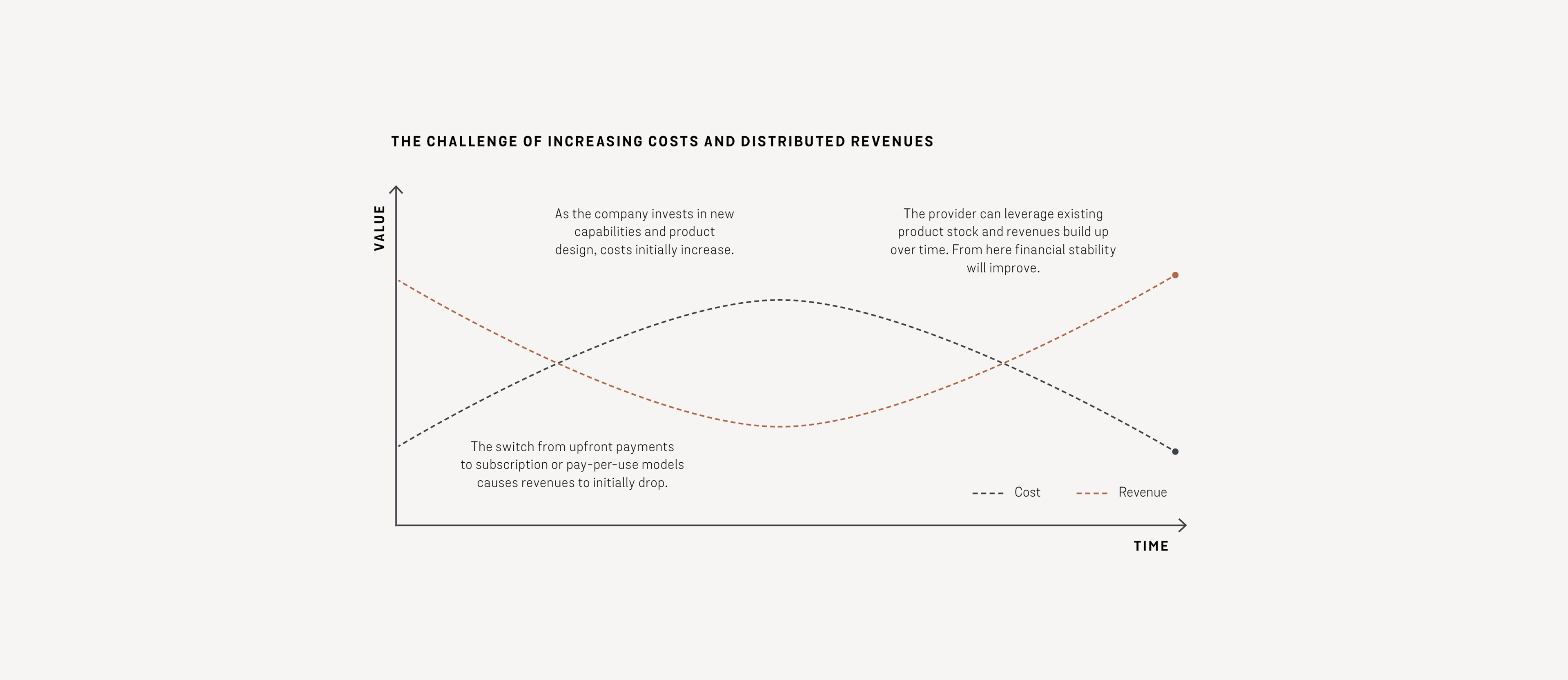
So how can one overcome these challenges to reap the long-term financial benefits of Product-as-a-Service?
We identified five actions a business can take to mitigate the impact of increasing operational costs and financial risk. In this article we focus on two of these: building a solid business case and setting the right KPIs.
How to test and build your PaaS business case
Your PaaS business case need to include a forecast of revenues and cost for PaaS agreements over time. It also needs to show how value is captured from multiple use cycles, as this is what makes the business model more sustainable.
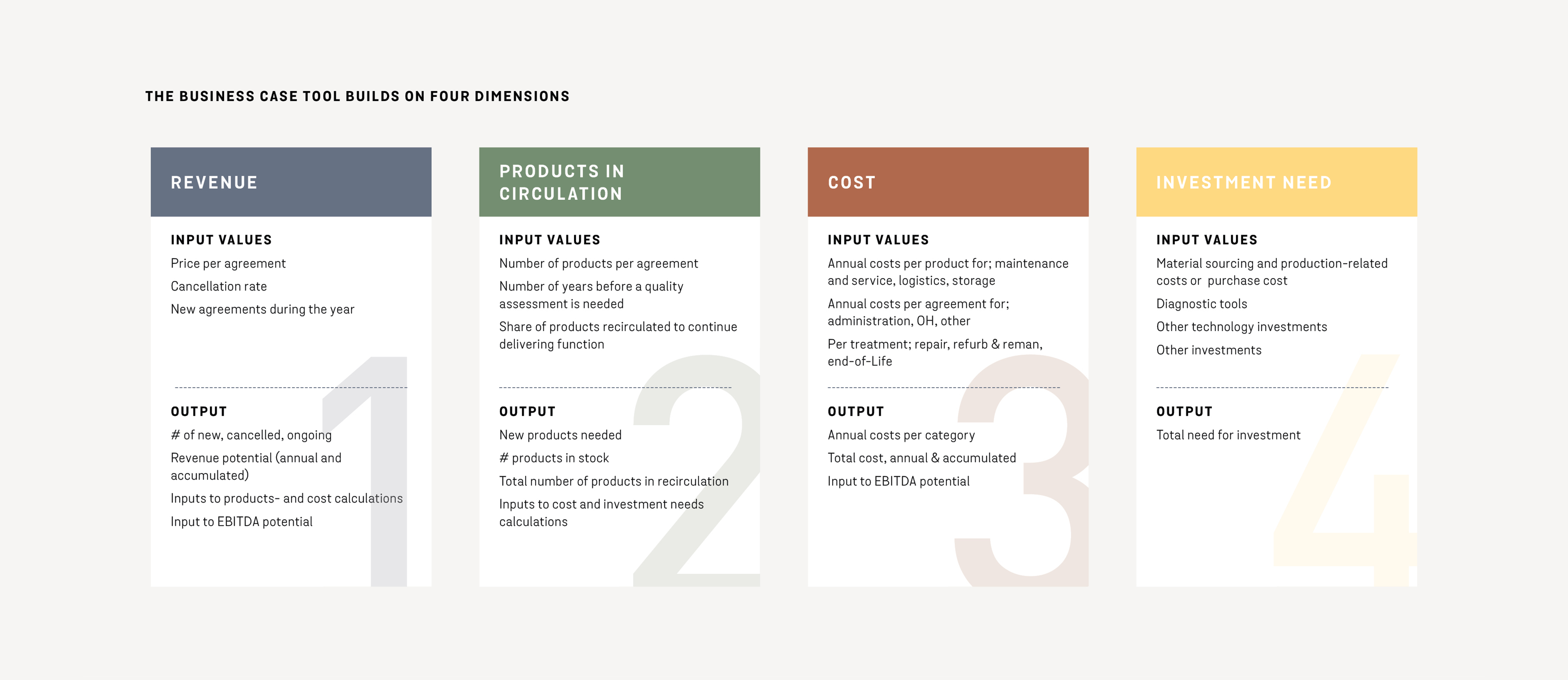
We developed a spreadsheet tool to help you get started and get the first assessment of your PaaS business case. The tool itself is built around four dimensions: revenue, products in circulation, cost, and investment needs.
Overall, it is pretty similar to any other business case. However, we’ve made sure to add features that are PaaS-specific:
First, revenue needs to consider the impact of cancellation rates, as customers may drop out of a service agreement.
Second, you need to think about how many products you need for each service agreement and for how long they can be kept in use before maintenance is needed. To promote a longer product life, make sure to also think about the percentage of products that can be kept in use through activities such as remanufacturing.
Third, new costs are likely to be added to a PaaS offering. This includes maintenance, service, logistics, storage, and repair.
Fourth, it is important not to forget about the investment need. Perhaps your business is dependent upon new investments in technology such as diagnostic tools or asset management software to ensure smooth operations. This also needs to be included.
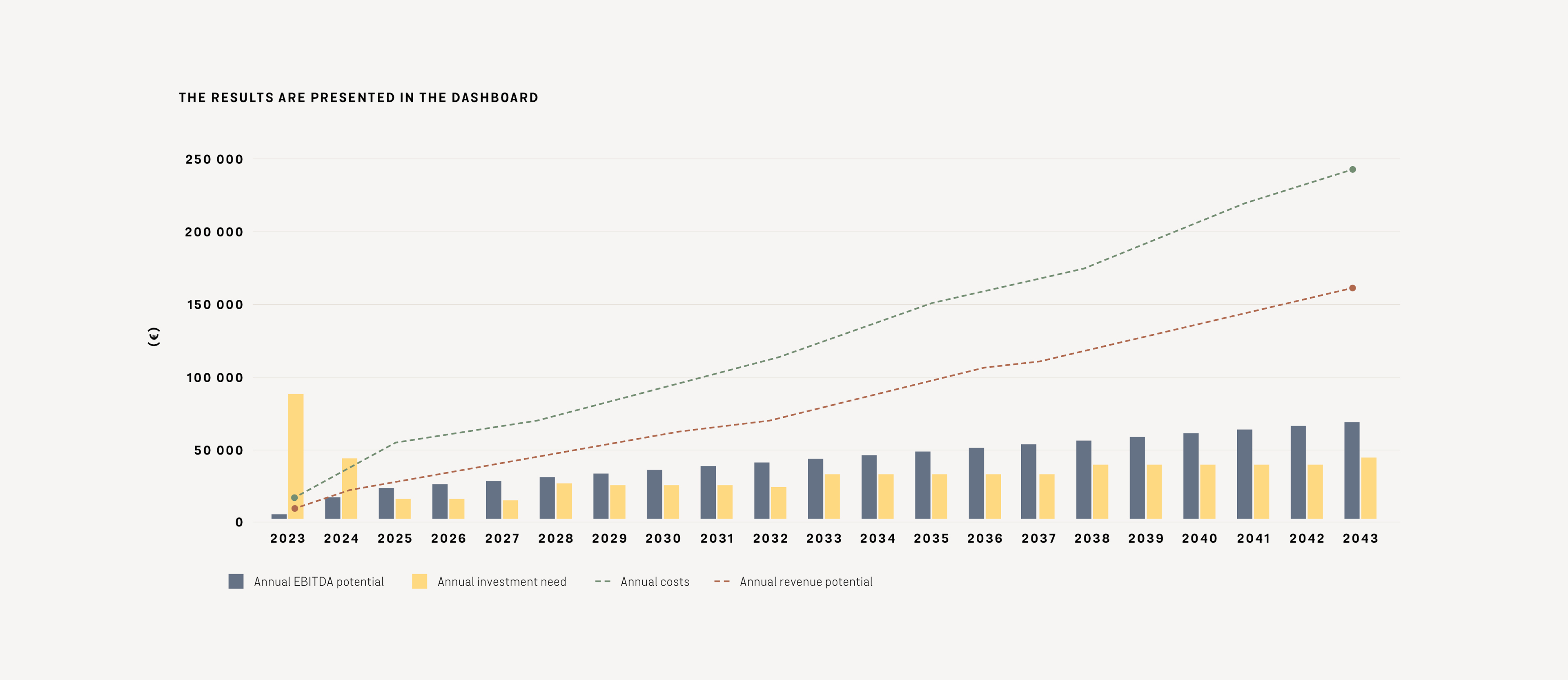
Once you have added all the numbers, you can use the dashboard to get a first understanding of your revenue and cost over time. This is a first step towards building a viable business case.
The tool can also be helpful in increasing the understanding of what happens when certain parameters change.
We recommend testing what happens if you:
- Increase the customer cancellation rate?
- Increase the % of products going to refurbishment or repair instead of end-of-life treatment?
- Half the cost of maintenance?
- Triple the cost of logistics?
These changes tend to have a significant impact on businesses which deliver PaaS offerings, which means that anticipating the financial impact of such events can make you better prepared when launching your offering.
Setting the right KPIs
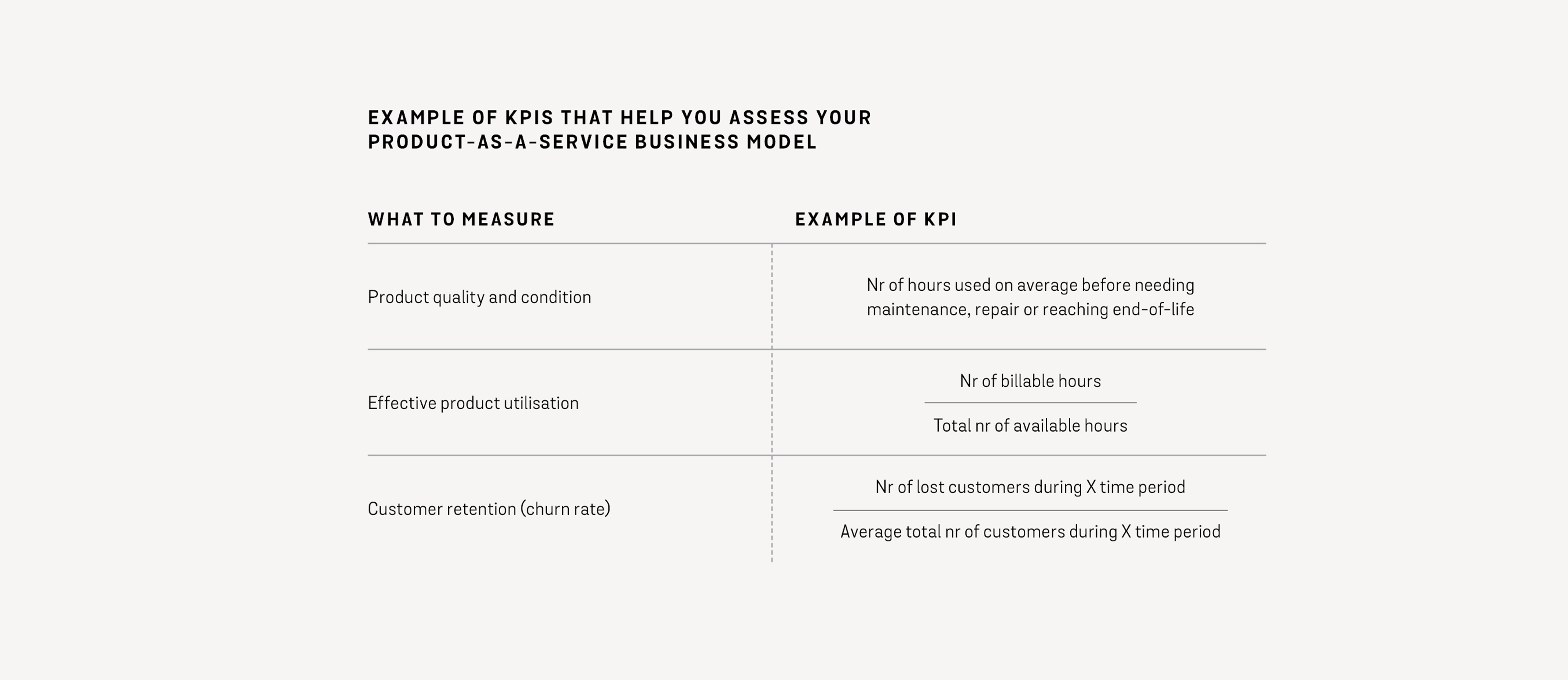
Getting PaaS-relevant KPIs in place is critical for evaluating your PaaS business model and securing external funding. Examples of necessary measures include such that support the valuation of assets and showcase the viability of your business model.
Putting a value on your assets based on both their current condition and the revenue they can be expected to generate over time is especially important if they are used as collateral. In general, assets are valued based on their market value, which depreciates quickly over time. Meanwhile, products in a PaaS business model are intended to continue to generate revenue in a long-term perspective.
Note:
If you plan to use products as collateral, they should preferably be standardised, durable, moveable, and not too geographically dispersed. This ensures your financiers can retrieve the assets if necessary. Smart and connected products further increase the chances of your assets being accepted as collateral, as it helps predict asset productivity, health, and expected lifetime. If this is not possible, long-term subscription agreements can be used as collateral if signed by creditworthy customers.
In addition, measuring the utilization rate of your products as well as your customer retention can help you assess the viability of your business model. In most PaaS business models products only generate revenue when in use. A low utilization rate is therefore a signal that the business may either struggle with lacking demand or suffer from poorly planned operations (e.g., logistics, maintenance, or repair). Customer retention also becomes more important in a PaaS business model where revenue is dependent upon your ability to continue delivering value to your customer. A low churn rate, along with steady growth in your customer base, signals that your offering is a good market fit.
The tools described in this article are found here. For more on the topic of Product-as-a-Service, have a look at our report “Product-as-a-service in the circular economy: the nine challenges and how to fix them.”


